Crypto Crime Surged 162% in 2025 — Illicit Addresses Received $154 Billion
Sanctioned entities, darknet markets, and ransomware operations drove the unprecedented spike, with Bitcoin still cited as the gateway currency of choice for new entrants.
The only cryptocurrency not competing with Bitcoin — strengthening it, by scrubbing away the dirt.
"Yep, with enough soap, you could blow up the whole world."
— Tyler Durden, Fight Club
In 2014, a group of developers on BitcoinTalk saw what was coming. Underground markets were using Bitcoin to buy malware, fund ransomware, and trade in the shadows — and mainstream media was watching, ready to use every headline as ammunition.
They built Soapbar — not to compete with Bitcoin, but to offer an alternative for the underground. A clean coin, designed to absorb the dirty use cases and let Bitcoin evolve into what it was meant to be: a legitimate global currency.
Now, a decade later, the problem is worse than ever. The OG developer is back. The mission continues. $SOAP is relaunched.
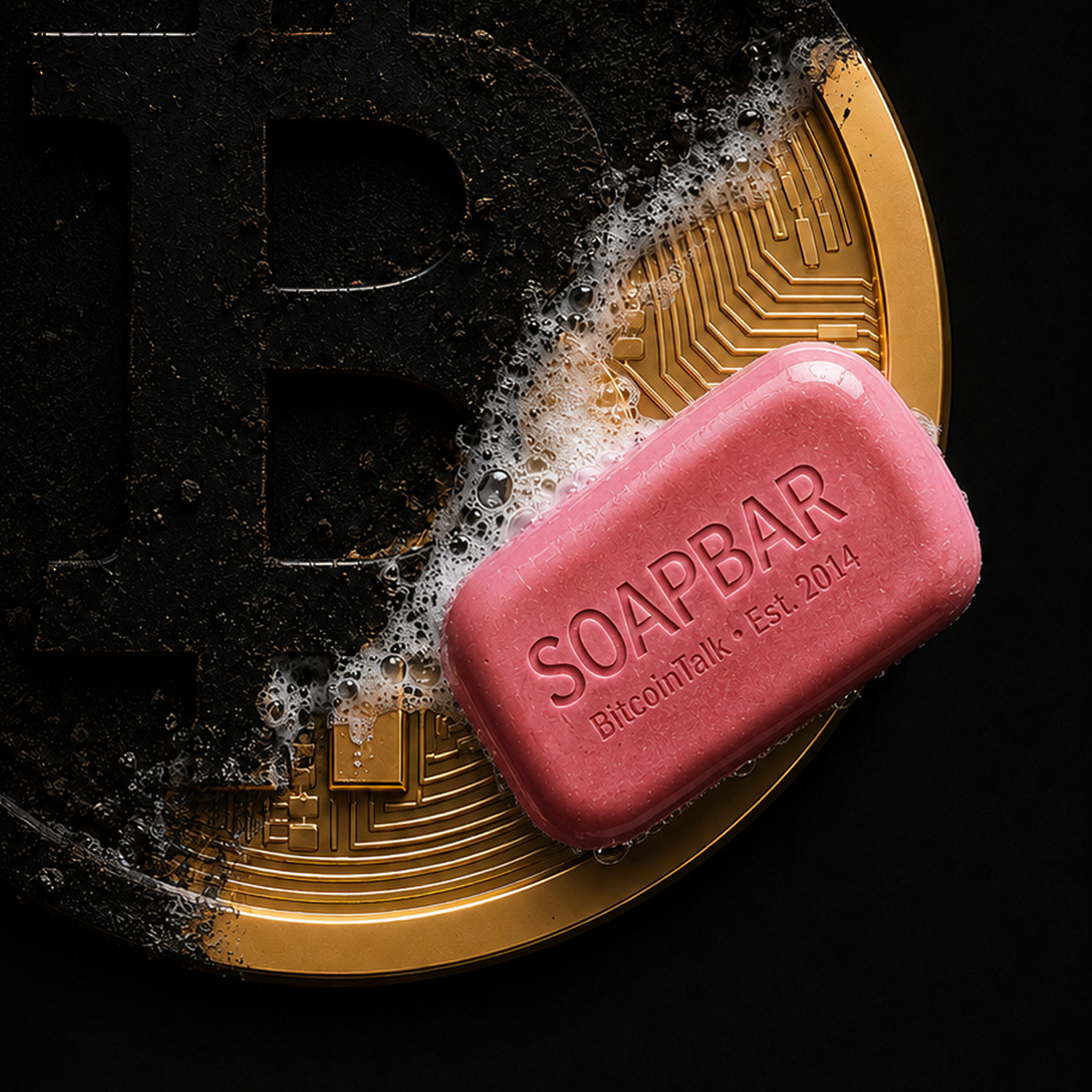
We built $SOAP in 2014 because we saw what underground use was doing to Bitcoin's image. Eleven years later, the headlines write themselves.
Sanctioned entities, darknet markets, and ransomware operations drove the unprecedented spike, with Bitcoin still cited as the gateway currency of choice for new entrants.
Investigation reveals five major darknet marketplaces moved nearly two billion dollars in BTC through underground channels — fuelling another wave of anti-crypto legislation.
A 15-month investigation links a Bitcoin wallet directly to an online marketplace trading illicit drugs and weapons — yet another Bitcoin headline regulators will weaponize.
We didn't build Soapbar to fight Bitcoin. We built it to protect it — by giving the underground a cleaner alternative, so Bitcoin can finally be what Satoshi intended.
See The Cleanse Protocol →The original creator of $SOAP is on board this relaunch — bringing the mission, the history, and a decade of conviction back to the blockchain.